Designing for Trust in Non-Profit Giving

Background
The Engagement
I worked with Relativity Tech as a contracted product designer, brought in by the CEO, a former senior manager I collaborated with at Bank OZK. (see related work: Bank OZK). I served as the sole designer, working directly with leadership and engineering to deliver client facing SaaS products.
Project Context
Many mission-driven organizations operate with a fragmented digital experience. Impact stories and project updates live on one side; the act of giving lives on another. Engaging narratives often end in a generic “Donate Now” button, with funds routed into a general administrative pool rather than directly supporting the story that inspired the donor.
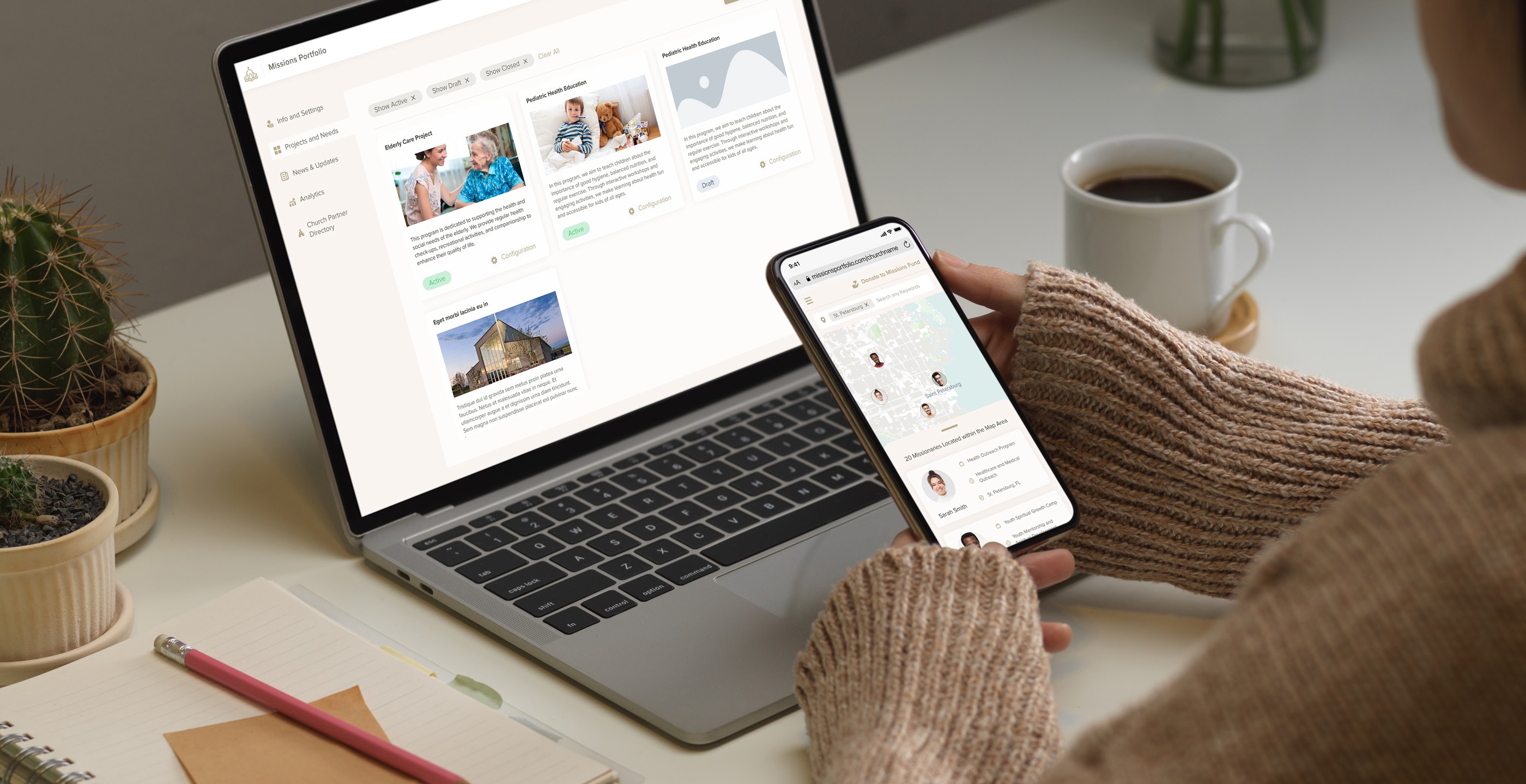
In this case, the challenge was within churches. This 0-to-1 design initiative focused on building a white-label platform they could adopt as their own, directly connecting storytelling with giving and turning moments of inspiration into purposeful, transparent transactions.
Employer
Relativity Tech
Project Timeframe
1 Month
Role
Sole UX/Product Designer
Team
PM
Scope
Designed a 0-to-1 white-label ecosystem integrating donor portals, field project management, financial tracking, and administrative oversight.
Impact
Established a direct transparency loop connecting donors to outcomes while reducing missionary administrative reporting time from hours to minutes.
The Problem Statement
The Challenge
Church mission programs suffer from a "Transparency Gap." Donors give money into a general fund (a "Black Box") and rarely see specific outcomes.

The Business Impact
This lack of visibility leads to donor attrition (people stop giving) and administrative bottlenecks (church staff spend hours manually chasing missionaries for updates).
The Goal
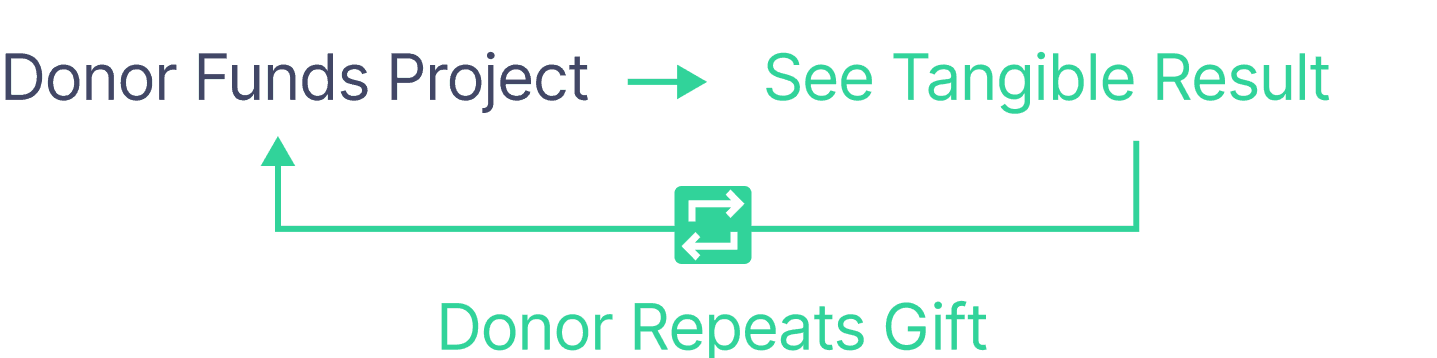
Create a centralized ecosystem that creates a transparent feedback loop between the donor's contribution and the missionary's impact.
My Role
As the Sole Product Designer, I led the design process from concept to high-fidelity prototyping. I was responsible for defining the user flows that connect the Donor, the Missionary, and the Church Admin, ensuring the system was flexible enough to be white-labeled for various church brands.
The Users
We focused on two distinct user groups. The Donors, who need visibility to feel confident in giving, and the Missionaries, who hold the information but currently lack a way to share it effectively. While they depend on each other, they operate in completely different environments with distinct challenges.
The Donors
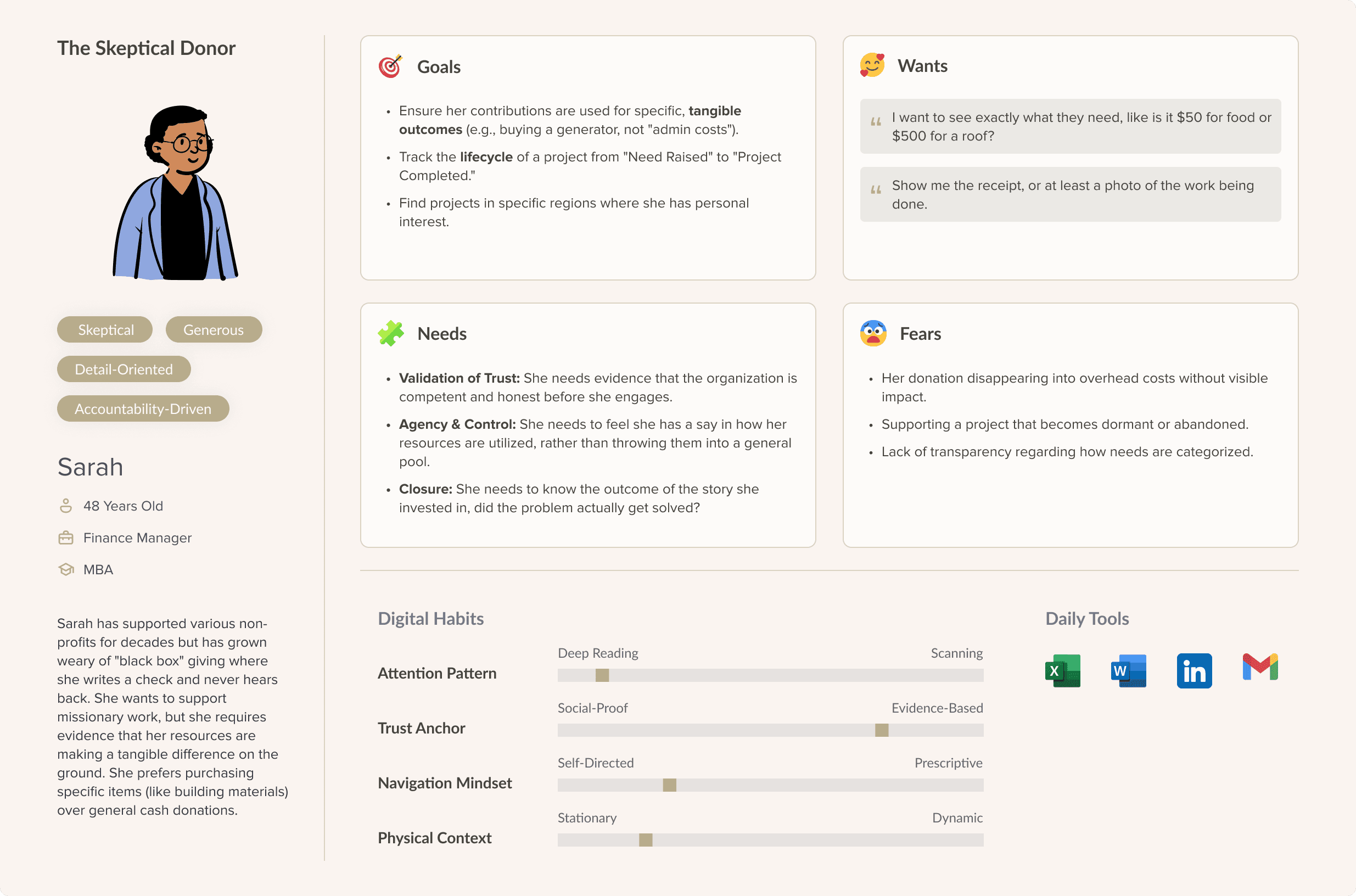
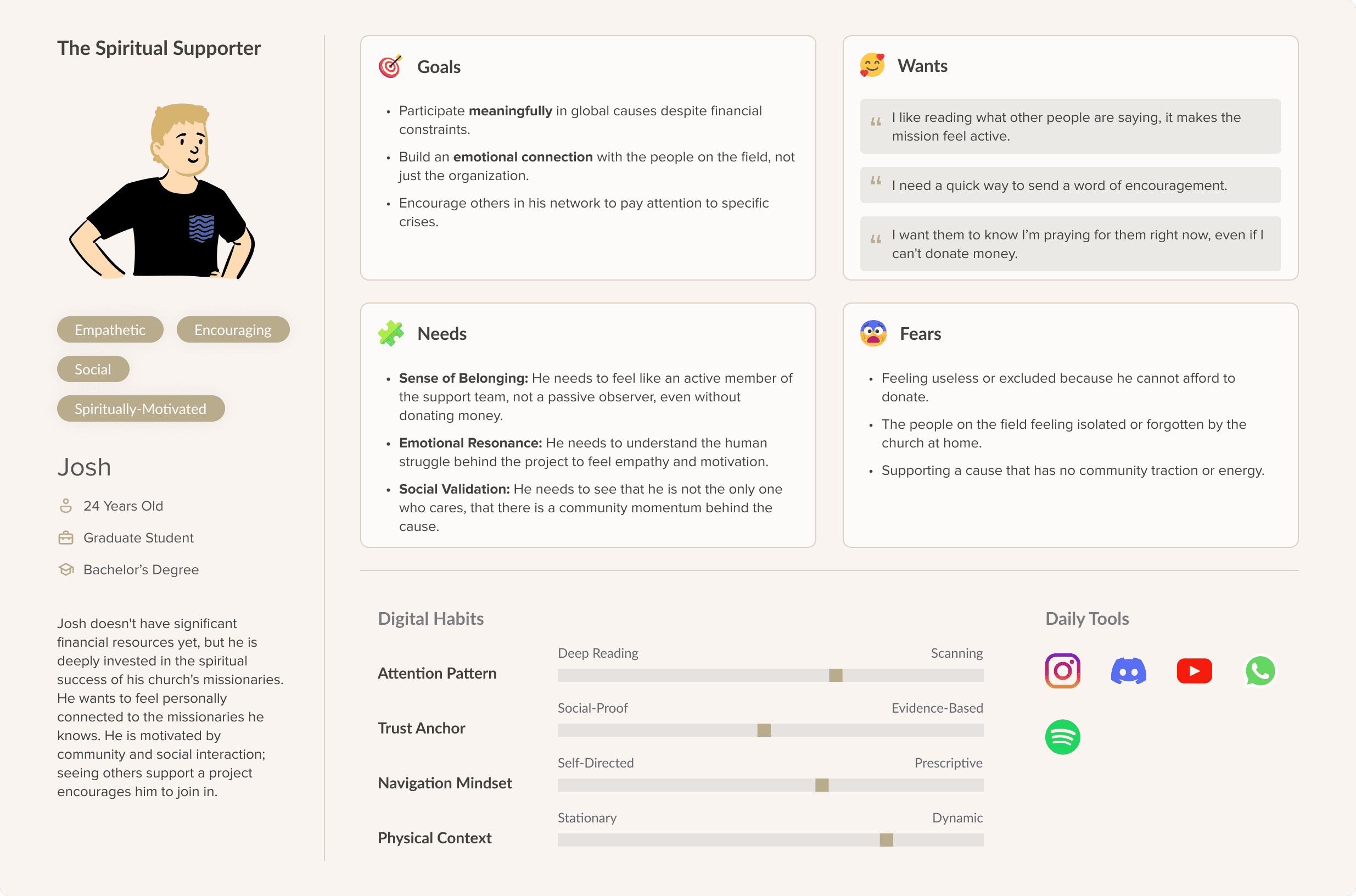
| The Donor's Perspective
Sarah and Josh are motivated by impact. They want to give, but often hesitate or stop because they can't see where the money goes.
They need validation that their support is making a difference, but currently, they are met with silence.
The Missionary
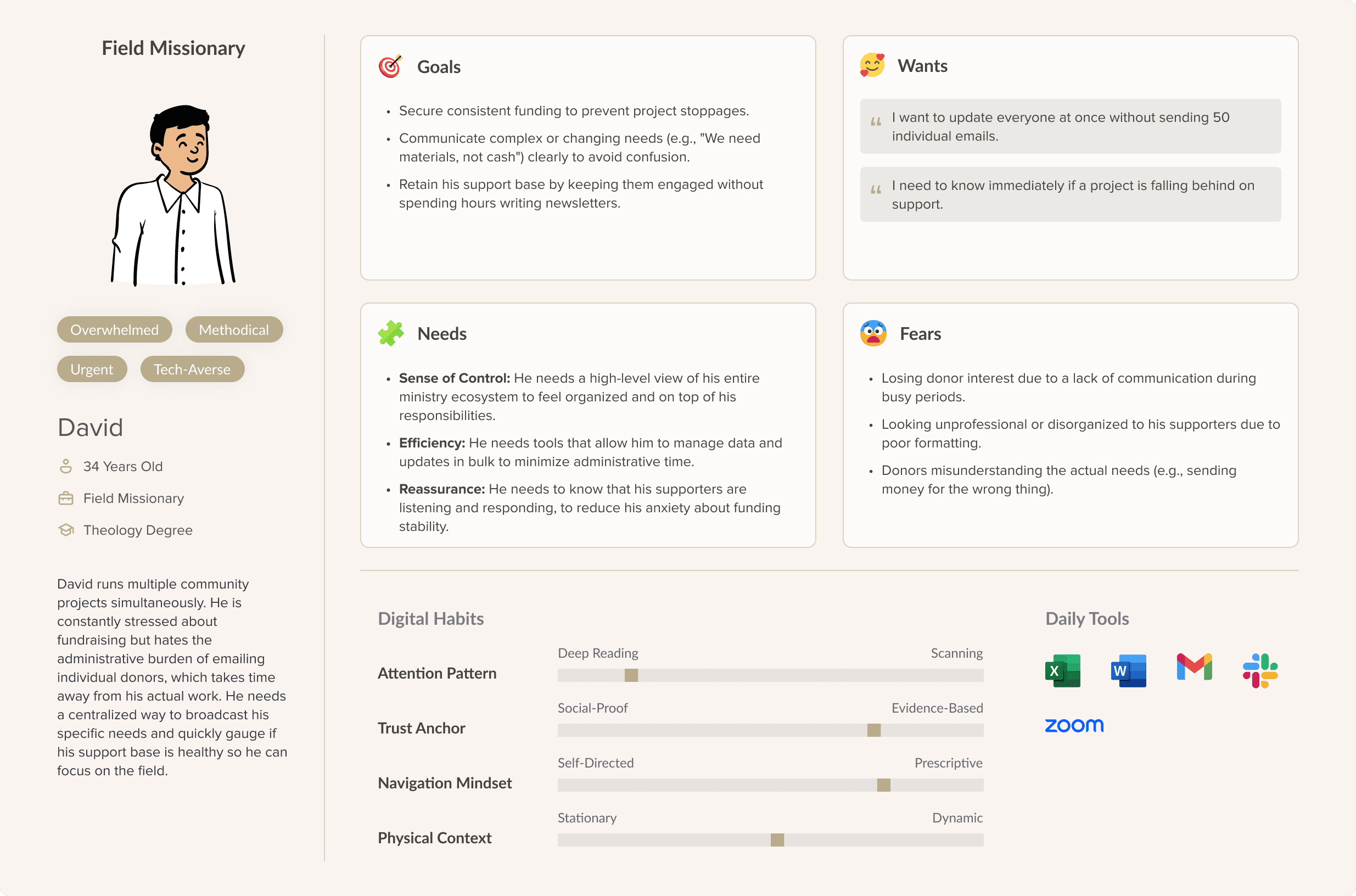
| The Missionary's Perspective
David creates the impact Sarah wants to see, but he has no channel to show it. The existing church infrastructure is designed for top-down announcements, not field reporting.
There is no digital mechanism for him to share real-time progress effectively. Even if he posts an update, there is no system to route it to the specific donor who funded the project.
Product Strategy
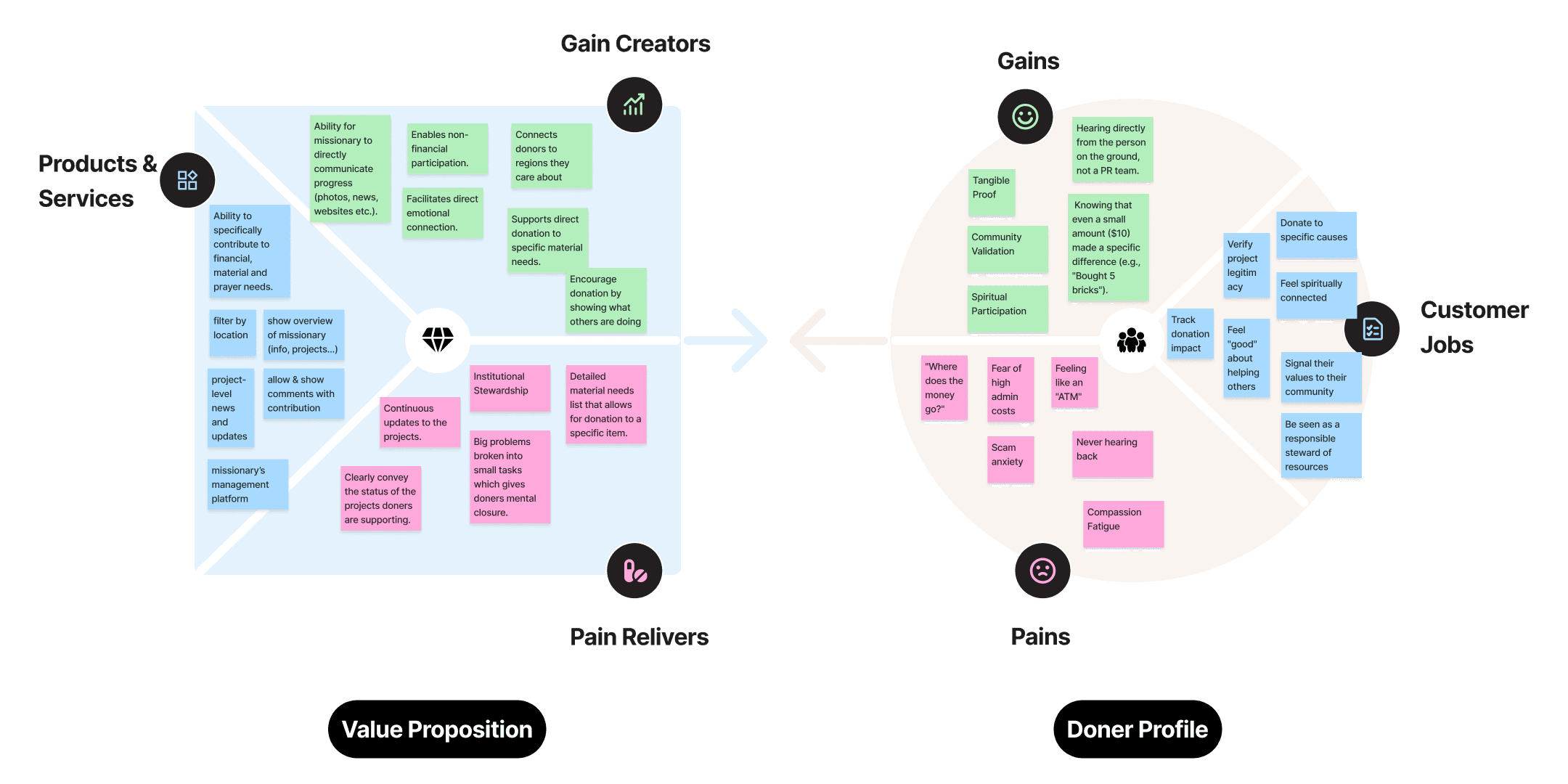
| Mapping User Needs to System Features
To fix the broken feedback loop, we needed to align the Donor's need for proof with the Missionary's ability to provide it.
I mapped the specific anxieties that stop users from donating directly to the system features that resolve them. This strategy ensured that the product focused on building trust through transparency rather than just processing transactions.
Design Solutions
The donor interface shifts the focus from generic donations to specific, tangible participation. I designed the project page to function as a community hub where users can see exactly what is needed, whether financial, material, or spiritual, and see how others are contributing in real-time.
| Multi-Type Contribution
Users can support projects in three distinct ways: Financial (money), Material (specific items like "wheelchairs", "desks" etc.), or Prayer (spiritual support).
| Social Proof & Engagement
Every contribution can include a public comment. Seeing a feed of others' gifts and encouraging words builds a sense of community and motivates further engagement.
A dedicated workspace that gives missionaries full control over their digital presence and fundraising campaigns, removing the dependency on administrative middlemen.
| Profile & Project Control
Enables missionaries to fully customize their public profile, manage project tags, and modify campaign details to ensure information is always accurate.
| Granular Needs Definition
A specialized system to request help with precision, defining the exact type (Material, Financial, Prayer) and quantity to guide donors effectively.
| Direct Impact Reporting
A simplified publishing interface to upload media and write progress updates, instantly notifying the specific donors who funded the project.
Video
The Missionary Flow
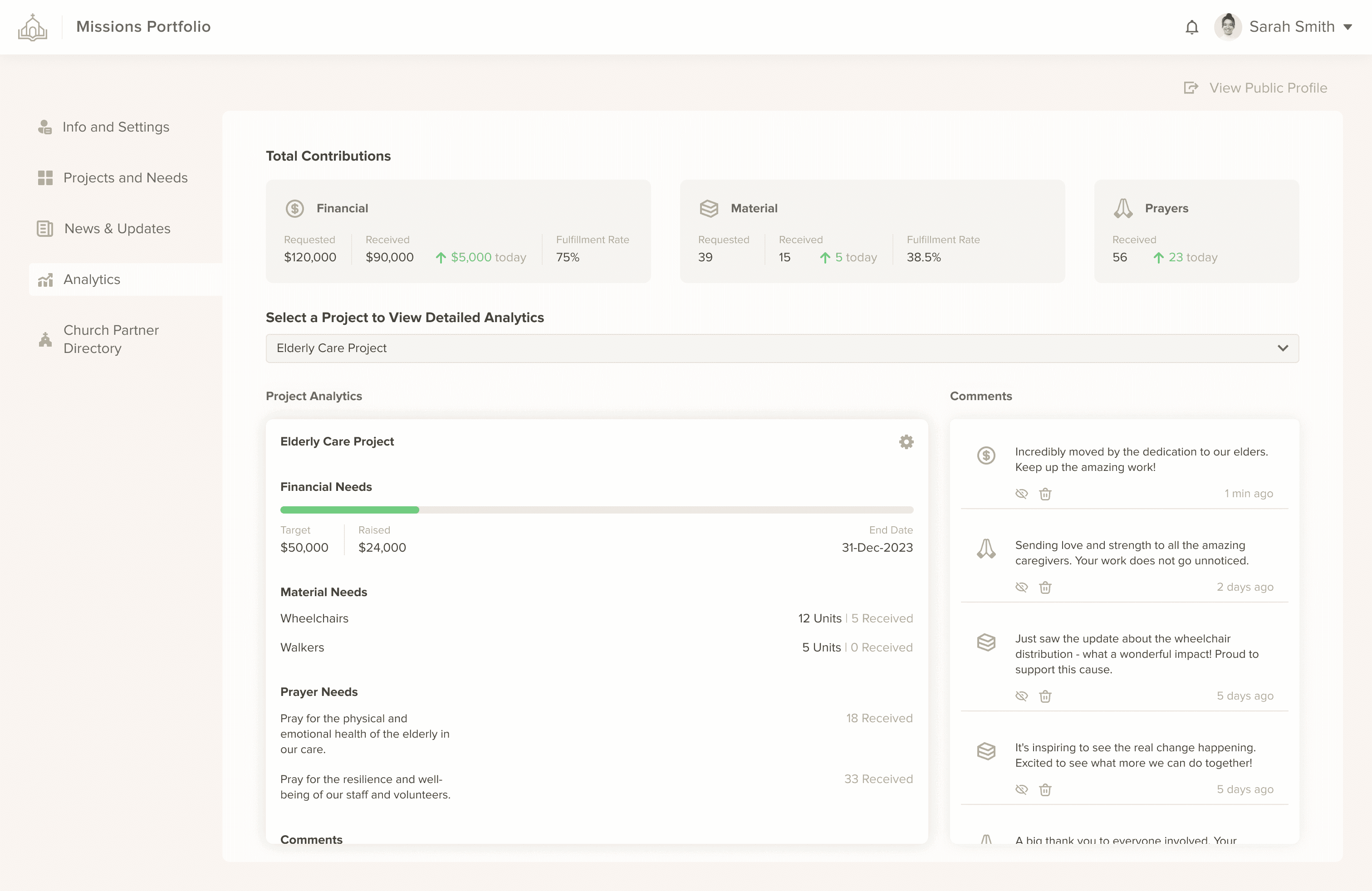
Beyond simple management, the dashboard provides missionaries with a high-level view of their support health. This section visualizes the data so they can understand donor behavior without digging through spreadsheets.
| Contribution Metrics
Visual breakdowns of total funding and support received over time.
| Needs Overview
A status view showing which specific needs have been met and which are still pending.
| Engagement Tracking
A consolidated list of donor comments and interactions, allowing the missionary to see who is active in their community.
Image
The Missionary Dashboard
The admin view provides the church with centralized control over their white-labeled platform. It connects the high-level organization goals with the individual missionaries on the ground.
| Church Profile Setup
Tools to configure the organization's public-facing identity and branding.
| Missionary Directory
A data grid to view, manage, and verify all associated missionary accounts in one place.
| Multi-Level Analytics
A flexible analytics engine that allows admins to view data at the Organization Level (total impact) or drill down to the Missionary Level (individual performance).
Video
The Admin Flow
Reflections
This engagement focused on the 0 to 1 Launch Phase: validating the core value, establishing the brand, and building the essential conversion flow. However, due to the constraints of an early-stage launch, several high-impact features were roadmapped for future exploration.
Future Design Considerations
| Companion Mobile App for Field Work
While the current web platform handles complex management, a dedicated mobile app would allow missionaries to quickly capture needs and draft updates offline. This "draft now, sync later" workflow ensures they can document impact in real-time, even in remote areas with unstable connections.
| Smart Personalization Engine
Currently, donors browse projects manually. Future iterations could use their giving history to proactively recommend specific needs (e.g., "You supported the roof last year; would you like to help paint the walls?"), transforming passive browsing into active targeting.
| Inter-Church Resource Sharing
Currently, churches operate in silos. A future "Network Tier" could allow affluent churches to discover and fund under-resourced missionary projects from other partner organizations, creating a global safety net rather than just local support.
Key Takeaways
Designing for "Emotional ROI"
Unlike e-commerce, where a user receives a physical product, a donor only receives a feeling of impact. I learned that the interface must substitute the "product" with immediate, high-fidelity validation. If the user doesn't feel the weight of their contribution instantly, the transaction feels like a loss, not a gift.
Specificity Drives Conversion
The biggest barrier to donating is skepticism about where the money goes. My research showed that users are far more willing to pay for a specific, tangible item than a generic "General Fund." Designing for granular, itemized giving was the key to unlocking donor generosity.
Thank you for reviewing this case study.
I am currently open to full-time UX/Product Design opportunities. If you’re interested in learning more about the thinking behind this project, feel free to reach out.